
What Causes Recurring Drain Clogs
A drain that backs up once is an annoyance. A drain that backs up every few weeks is a warning. Most homeowners in Burleson and across Tarrant and Johnson County treat clogs as isolated events, so they reach for a bottle of chemical cleaner or a hardware store snake and move on with the day. The water goes down, the problem seems solved, and three weeks later the same tub is holding an inch of standing water. That pattern almost never means bad luck; it means something inside the pipe is still there. Recurring drain clogs point to a physical condition in your plumbing system, such as a coating of hardened grease, a root mass growing through a joint, a low spot in the line, or a section of pipe that has corroded from the inside out. Summer makes the problem more obvious in North Texas, because heat and dry soil push tree roots toward the only reliable moisture on the property, and busy households run more showers, more laundry, and more dishes than they do in cooler months. Understanding the real cause is the only way to stop paying for the same clog twice a year. Below is a plain explanation of what drives repeat blockages, how professionals diagnose them, and what actually clears a line permanently.
Common Causes of Recurring Drain Clogs in Home Plumbing
Recurring drain clogs almost always trace back to one of three categories: what goes into the pipe, what grows into the pipe, and what has gone wrong with the pipe itself. A kitchen line that clogs on a schedule usually has a grease problem. A main sewer line that backs up seasonally usually has roots. A drain that clogs no matter what you do, and clogs in the same spot every time, usually has a structural defect that traps solids. Age matters, too. Homes built in Fort Worth, Everman, and Forest Hill before the mid 1970s often still have cast iron or clay tile drainage, and both materials degrade in predictable ways. Newer homes are not immune, since soil movement in this region shifts pipe alignment over time. Identifying the correct category saves money, because the fix for grease is not the fix for roots, and neither one repairs a broken pipe.
Grease and Soap Buildup Behind Recurring Drain Clogs
Grease is the single most common reason kitchen drains clog again and again. Cooking oil, bacon fat, butter, and the residue rinsed off plates all leave the sink as a warm liquid, then cool inside a pipe that sits underground or inside a slab. As it cools, it clings to the pipe wall and hardens into a waxy film. Every additional wash cycle adds another layer. Coffee grounds, rice, pasta, and small food particles stick to that film and build a mass that narrows the pipe from four inches of usable diameter down to one. Running hot water afterward does not solve it; the grease simply travels a few feet farther down the line and cools there instead. Dish soap helps grease move, but soap does not eliminate it. The result is a slow drain that gets worse over several months, clears briefly after a cable machine punches through it, and then returns because the coating on the pipe wall was never removed.
Bathroom drains follow the same pattern with different materials. Hair, skin cells, and the fatty compounds in bar soap combine into a dense mat that catches on any rough surface inside the pipe. Hard water accelerates this, and most of North Texas sits on hard water with a high mineral content. Calcium and magnesium react with soap to form soap scum, a sticky residue that bonds to pipe walls far more aggressively than liquid body wash does. In a shower drain, that mat usually forms within the first two feet below the strainer, which is why a quick pull with a hair snare often gives temporary relief. Tub and lavatory drains build the same deposits inside the P trap and the branch line behind the wall. Over years, the interior diameter shrinks enough that a normal shower produces standing water. Cleaning the visible portion does nothing for the twelve feet of pipe you cannot see.
Laundry lines deserve their own mention because they carry a heavy load that most homeowners never think about. A washing machine discharges a large volume of water very quickly, along with lint, detergent residue, and fabric softener. Fabric softener is fat based, and it behaves in a drain much like cooking grease does. Lint acts as the binding agent, catching on every deposit and forming a felt like plug. Households that run several loads a day during summer break push far more of this material into the line than they do in other seasons. When a laundry standpipe overflows, the cause is rarely a single object; it is accumulated buildup that finally reached the tipping point. Getting the pipe back to full diameter requires scouring the walls, not just opening a channel through the middle of the blockage. Dealing with buildup you cannot reach? Click here for our drain cleaning service.
Tree Root Intrusion as a Cause of Recurring Drain Clogs
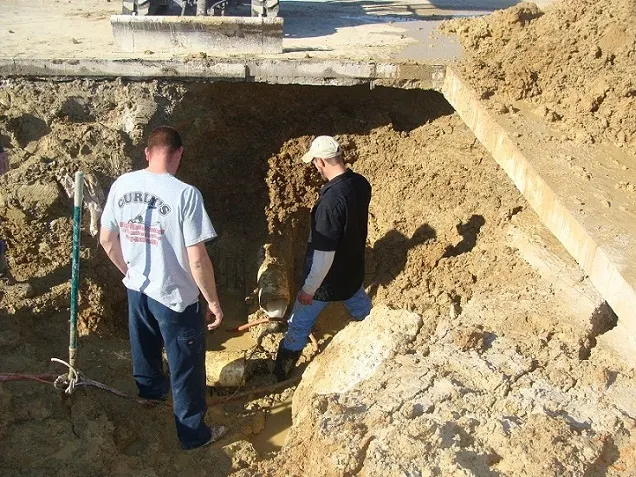
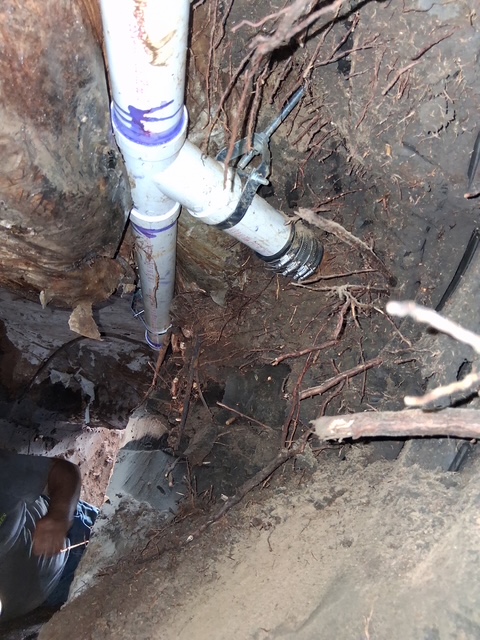
Tree roots cause more recurring drain clogs in main sewer lines than any other single factor in this part of Texas. Roots do not attack healthy pipe out of aggression; they grow toward moisture and nutrients. A sewer line carries warm water and organic waste, and even a hairline crack or a slightly separated joint releases vapor into the surrounding soil. That vapor trail is exactly what a root system follows. Once a fine root hair reaches the opening, it slips inside, finds an ideal growing environment, and thickens. Within a season or two, that single hair becomes a fibrous mass that spans the pipe like a net. Toilet paper, wipes, and solid waste catch on the net instead of flowing past it, and the line backs up.
Summer intensifies root activity in ways homeowners often misread. When rainfall drops off and soil dries out, surface moisture disappears and root systems extend farther in search of water. Ornamental pears, live oaks, elms, willows, and hackberries are all common in older neighborhoods across Burleson, Crowley, and Cleburne, and all of them send roots well beyond the visible canopy. A tree standing thirty feet from the house can still reach a sewer lateral. This is why some households see backups every August and again after the first heavy fall rain. The clog is not new each time. It is the same root mass, regrowing after the last cabling cleared it.
Cutting roots with a cable machine is a legitimate step, but by itself it is a temporary measure. A rotating blade shears the intrusion off at the pipe wall and restores flow, and that alone can buy six months to two years. What it does not do is remove the root structure outside the pipe or repair the opening that let the roots in. The remaining stubs regrow, often thicker than before, because pruning stimulates growth. A permanent fix requires locating the entry point with a camera and correcting the defect through spot repair, pipe lining, or replacement of the failed section. Homeowners who understand this distinction stop viewing annual root cutting as a solution and start planning the actual repair. If your main line backs up on a schedule, click here for our sewer line repair service.
Pipe Damage and Sagging Lines That Create Recurring Drain Clogs
Drain lines rely on gravity, and gravity only works when the slope is correct. Small branch lines are typically installed with roughly a quarter inch of fall per foot, which moves liquid and solids together at the right speed. When a section of pipe settles, that slope flattens or reverses, and a low spot forms. Plumbers call this a belly. Water pools in the belly instead of flowing through, solids drop out of suspension, and the low point slowly fills with sludge. Every flush pushes a little more material into a pocket that never fully drains. The homeowner experiences this as a clog that returns in the same location no matter how often the line is cleared, because clearing removes the debris without correcting the dip that caused it.
Soil conditions in North Texas make bellies common. The expansive clay under most of this region swells when wet and shrinks when dry, and that cycle moves everything buried in it. Foundations shift, and so do sewer laterals. A pipe installed perfectly in 1985 can carry a two inch sag by now with no one at fault. Poor bedding during original construction makes it worse, since a line laid over loose fill will settle unevenly as that fill compacts. Bellies also form where a trench crosses a utility line or a driveway cut. None of this is visible from inside the house, which is why so many homeowners spend years treating a structural problem as a maintenance problem.
Material failure produces the same recurring pattern. Cast iron drain lines corrode from the inside, developing a rough, scaled surface that catches waste the way sandpaper catches thread. Advanced corrosion channels out the bottom of the pipe entirely, leaving a trough instead of a round line. Clay tile joints separate as soil moves, creating offsets that snag solids and invite roots. Orangeburg pipe, a compressed fiber product used in some homes built between the mid 1940s and the early 1970s, deforms into an oval and eventually collapses. Galvanized steel supply and drain piping builds mineral scale that shrinks the interior diameter year after year. In each case, the pipe wall itself is the obstruction, so no amount of cleaning restores normal flow. Replacement or lining is the only real answer, and a camera inspection is what tells you which one you need.
How to Stop Recurring Drain Clogs for Good
Stopping recurring drain clogs requires two things: an accurate diagnosis and a cleaning method that restores the full diameter of the pipe. Most repeat clogs survive because the first two attempts were guesses. A chemical cleaner dissolves a channel through the softest part of the blockage. A cable machine bores a hole through the middle and leaves the pipe walls coated. Both restore flow temporarily, and both leave the underlying condition in place. Professional work reverses that order. The line gets inspected first, cleaned second, and repaired only where the inspection proves repair is needed. That approach costs more on the first visit and far less over five years.
Camera Inspection Is the First Step to Stop Recurring Drain Clogs
A sewer camera is a waterproof high resolution head on a flexible push rod, fed through a cleanout or a removed toilet flange into the drain line. It shows the interior condition of the pipe in real time on a monitor. That footage answers the questions guesswork cannot. You see the material the pipe is made of, the condition of the joints, the presence and thickness of scale, and the exact nature of any obstruction. Roots look like roots. Grease looks like a yellow or gray coating. A belly shows up as standing water the camera drives into. Without that image, every recommendation is an estimate.
The camera also carries a locating transmitter, called a sonde, that broadcasts a signal to a receiver above ground. The technician walks the yard and marks the precise position and depth of the camera head. This matters enormously for repair pricing. Knowing a defect sits eleven feet from the foundation at a depth of four feet turns an open ended excavation into a targeted dig. Homeowners who skip this step often pay for exploratory digging that could have been avoided. In slab foundation homes, which describes most of Burleson and the surrounding communities, the difference between a yard repair and a slab tunnel is thousands of dollars, and only a locate tells you which one applies.
Inspection also protects you from unnecessary work. Not every recurring clog means a broken pipe. Plenty of lines are structurally sound and simply carry twenty years of accumulated grease and scale. A camera confirms that, and the correct response is a thorough cleaning rather than a replacement. The footage gives you documentation as well, which is useful for real estate transactions, warranty claims, and insurance conversations. It also creates a baseline. If the same line is inspected again in three years, you can compare conditions and see how quickly a known defect is progressing. Want to know exactly what is happening inside your line? Click here for our sewer line inspection service.
Hydro Jetting Clears Recurring Drain Clogs at the Source
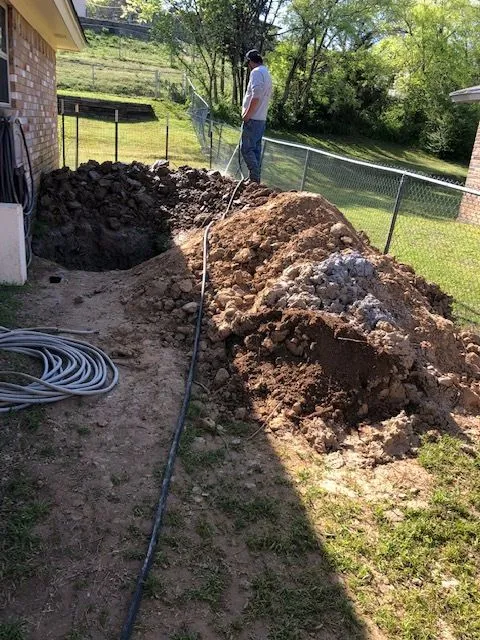
Hydro jetting uses water at high pressure to scour the interior of a drain line back to its original diameter. A specialized hose carries a nozzle that fires jets rearward and forward at pressures commonly ranging from about 1,500 to 4,000 psi, depending on pipe size and condition. The rear facing jets propel the hose up the line and blast debris off the pipe walls; the flow then carries that material back toward the cleanout and out of the system. Unlike a cable, which cuts a passage through the center of a blockage, jetting removes the buildup itself. Grease, soap scum, sludge, sand, and fine root hairs all come out. The pipe wall is left smooth, which slows the rate at which new deposits form.
This method is particularly effective on the two clog types that repeat most often. Kitchen lines coated in hardened grease respond dramatically, since the water strips the coating rather than tunneling through it. Root intrusions get cut back and flushed out, and the jets reach the pipe wall where the roots entered, which a cable blade often misses. Restaurants and commercial kitchens rely on jetting for exactly this reason, and residential lines benefit from the same physics. Households with a history of two or three backups per year frequently go several years after a proper jetting.
Hydro jetting requires judgment, which is why it belongs in trained hands. Pipe condition determines safe pressure, and a badly corroded cast iron line or a deteriorated clay lateral may not tolerate aggressive settings. That is another reason the camera comes first. A responsible plumber inspects, selects an appropriate nozzle and pressure, jets the line, and then runs the camera a second time to verify the result. That verification step is what separates a real solution from a hopeful one. It also tells you honestly if a structural defect remains, so you can plan the repair on your own timeline instead of during an emergency. Ready to clear the line properly? Click here for our hydro jetting service.
Daily Habits That Prevent Recurring Drain Clogs
Once a line is clean, keeping it clean comes down to a handful of habits. Never pour cooking grease, oil, or bacon fat down a sink; let it cool in a can and throw it away. Scrape plates into the trash before rinsing. Keep coffee grounds, rice, pasta, potato peels, celery, and other fibrous or starchy scraps out of the garbage disposal, since a disposal grinds food but does nothing to help it move through a pipe. Run cold water while the disposal operates and for fifteen seconds afterward, which keeps fats solid so they flush rather than coat. Use a basket strainer in every kitchen and bathroom sink. These steps sound minor, and collectively they eliminate the majority of preventable kitchen clogs.
Bathrooms need physical barriers more than anything else. A quality hair catcher over the shower and tub drain stops the material that forms the mat in the first place, and it takes ten seconds a week to empty. Flush toilet paper and human waste only. Wipes marketed as flushable do not break apart in a drain line, and they are a leading cause of main line backups nationwide; the same applies to paper towels, feminine products, dental floss, and cotton swabs. Do not use the toilet as a trash can for cat litter or medications. In homes with children, a quick reminder at the start of summer break saves a service call, since toys and small objects find their way into toilets when the house is busy.
Routine maintenance closes the gap. Running hot water through kitchen and laundry drains for a minute after heavy use helps carry residue farther along the line. An enzyme based drain treatment used monthly introduces bacteria that digest organic material, and it will not harm pipes the way acid or caustic products do. Households with known root pressure benefit from scheduled main line cleaning on a set interval rather than waiting for the next backup. If your home has mature trees near the sewer route, an inspection every couple of years is a reasonable investment. Prevention is cheaper than restoration every single time, and it keeps sewage where it belongs.
Why You Need a Professional Plumber for Recurring Drain Clogs
A repeat clog is a diagnostic problem before it is a cleaning problem. Solving it requires equipment most homeowners do not own and experience that comes from opening hundreds of lines. A licensed plumber brings a camera to see the cause, a locator to mark it, a jetter or cable machine to clear it, and the code knowledge to repair it correctly if repair is required. Just as important, a professional tells you when a line does not need work. Big Blade Plumbing & Rooter has served Burleson and the surrounding communities since 2007, and the approach has never changed: find the real cause, explain it plainly, and fix it once.
Store Bought Drain Cleaners Will Not Fix Recurring Drain Clogs
Chemical drain cleaners are the most common first response and the least effective one. Most rely on sodium hydroxide, sulfuric acid, or bleach compounds to break down organic material through a heat producing reaction. That reaction can open a narrow channel through a soft clog, which is why the drain seems to work afterward. It does not remove the coating on the pipe wall, and it does nothing at all to roots, a belly, or a collapsed section. The clog returns because the cause was never touched.
These products also carry real risk. The heat generated can soften PVC, damage rubber gaskets and seals, and accelerate corrosion in aging cast iron. Repeated use over years measurably shortens the life of a drain system. When a chemical sits in a fully blocked line, it becomes a hazard for the next person who opens that pipe, including the plumber who arrives to fix it. Splash injuries and chemical burns are a genuine concern, and mixing two different products in the same drain can produce dangerous fumes.
There is also a cost argument. A homeowner who buys four bottles a year for three years has spent real money on a problem that was never diagnosed, while the underlying defect quietly worsened. Roots thicken. A belly fills deeper. Corroded pipe channels out further. The eventual repair is larger than it would have been. Spending that money once on an inspection and a proper cleaning almost always comes out ahead.
When Recurring Drain Clogs Signal a Sewer Line Emergency
Certain symptoms mean the main sewer line is involved, and those deserve immediate attention. Multiple fixtures backing up at the same time is the clearest sign, especially when the lowest drains in the house are affected first. A toilet that bubbles when the washing machine drains, or a tub that gurgles when a toilet is flushed, indicates air moving through a partial blockage in a shared line. Sewage appearing in a shower pan or a floor drain is not a fixture problem at all. At that point, every drop of water used in the home has nowhere to go.
Other warning signs show up outside. A patch of grass that stays unusually green or soggy through a dry Texas summer often sits directly over a leaking sewer lateral. A sewage odor in the yard, around the foundation, or inside the home points to an opening somewhere in the drainage system. Sinkholes, soft spots, or a section of driveway that has settled can indicate soil washing away around a broken pipe. An unexplained increase in pests is another quiet indicator, since rodents and insects travel through compromised sewer lines.
Delay makes these situations worse and more expensive. Untreated sewage carries bacteria and creates a health hazard for everyone in the home, and standing water under a slab or in a crawl space leads to structural and mold issues. Water escaping a broken line also erodes the soil supporting your foundation, which is a serious concern in an area with expansive clay. Shutting off water use and calling a plumber quickly limits the damage. Fast response is the entire point of emergency plumbing service, and it protects far more than the pipe itself.
Why Choose Big Blade Plumbing & Rooter for Recurring Drain Clogs
Big Blade Plumbing & Rooter has been a licensed plumbing contractor since 2007, working on residential and commercial systems throughout Burleson, Fort Worth, Arlington, Mansfield, Crowley, Cleburne, Joshua, and the surrounding communities. That experience covers the full range of drainage problems this region produces, from grease packed kitchen lines in newer subdivisions to root damaged clay laterals under century old properties. Sewer line and drain work is a core specialty, not a side offering. The team carries the camera equipment, locating gear, and jetting capability required to diagnose and clear lines correctly the first time.
Honest recommendations are the foundation of how this company operates. You get told what the camera actually shows, what it means, and what the realistic options are, including the option to wait when waiting is reasonable. There is no pressure to approve a replacement when a cleaning will do the job, and there is no vague explanation when the situation is serious. Pricing is discussed before work begins. Homeowners deserve enough information to make their own decision, and that only happens when the person explaining the problem has nothing to gain from confusion.
Quality workmanship focused on long term reliability is the standard on every job. Lines are cleaned to full diameter and verified with a camera, repairs are made to code, and the work is done to last rather than to get through the week. Response times are fast, because a backed up sewer is not something a family can live with while waiting several days. Call Big Blade Plumbing & Rooter at (817) 517-2425 or email info@bigbladeplumbingandrooter.com to schedule an inspection. The shop is located at 2113 S Burleson Blvd, Burleson, TX 76028, and the goal on every call is simple: stop the clog from coming back.